
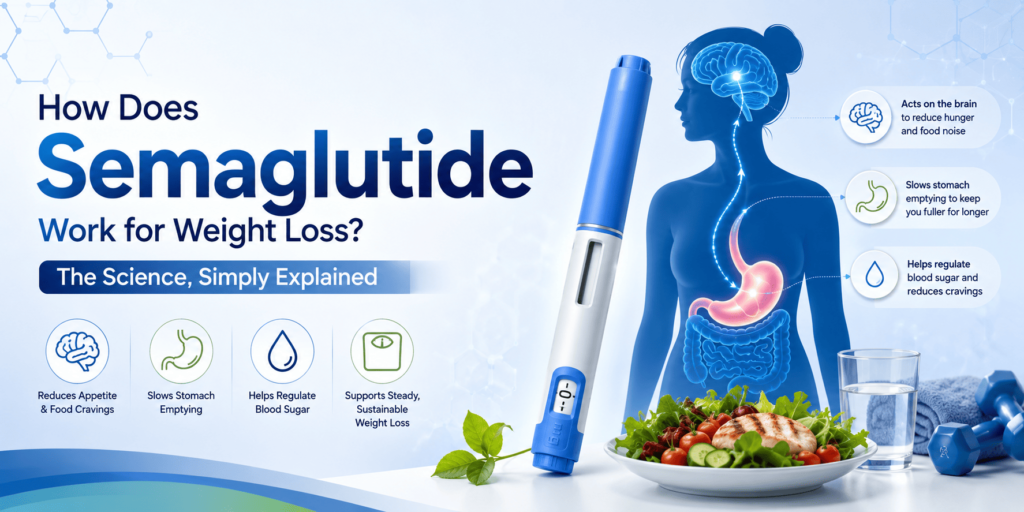
Semaglutide is a prescription medicine that was first developed to treat Type 2 Diabetes and is now also used to help adults with Obesity or overweight manage their weight. It works by imitating a natural gut hormone that helps control appetite, digestion, and blood sugar. Rather than acting as a stimulant or a fat burner, it supports gradual, steady weight loss when used alongside a reduced-calorie diet, physical activity, and medical supervision. This article explains how Semaglutide works, what results are realistic, and what you should know before considering it.
What Is Semaglutide?
Semaglutide belongs to a class of medicines called Glucagon-like Peptide-1 (GLP-1) receptor agonists. In plain terms, it copies the action of GLP-1, a hormone your gut naturally releases after you eat. It is sold under different brand names for different purposes: Ozempic and Rybelsus are approved for Type 2 Diabetes, while Wegovy is approved for chronic weight management.
The medicine comes in two main forms. Injectable Semaglutide is usually given once a week, while an oral tablet version is taken daily. Which form and dose a person uses is always a decision made with a prescribing doctor, never something to self-adjust.
How Does Semaglutide Work for Weight Loss?
Semaglutide does not burn fat directly. Instead, it changes the signals your body uses to regulate hunger and fullness, which makes it easier to eat less without constant willpower. Here is how that plays out in practice.
It acts on the brain’s appetite centers
Semaglutide activates GLP-1 receptors in areas of the brain that regulate appetite and satiety, particularly the hypothalamus. When these receptors are stimulated, hunger tends to feel less intense and a smaller meal can feel satisfying. Many people describe a quieting of “food noise,” the persistent background thoughts about eating that can make dieting difficult.
It slows how quickly the stomach empties
The medicine slows gastric emptying, meaning food leaves the stomach more slowly after a meal. Because of this, fullness lasts longer and hunger tends to return later. This effect can help reduce the urge to snack soon after eating.
It reduces cravings and calorie intake
Semaglutide can make rich, sugary, or high-fat foods feel less rewarding over time. As these foods lose some of their pull, overeating and unnecessary snacking often become easier to manage. The result is usually a gradual, natural reduction in daily calories rather than a sudden change.
It helps steady blood sugar
Semaglutide prompts the pancreas to release insulin when blood sugar is high and lowers glucagon, a hormone that raises blood sugar. This is why it was first approved for Type 2 Diabetes. Steadier blood sugar can also mean fewer energy crashes and sugar cravings, which indirectly supports appetite control.
Did you know? In the STEP 1 clinical trial, adults who took Semaglutide 2.4 mg once weekly alongside lifestyle changes lost an average of about 14.9% of their body weight over 68 weeks, compared with 2.4% for those on a placebo. Roughly 86% of participants on Semaglutide lost at least 5% of their body weight (Wilding et al., New England Journal of Medicine, 2021).
What Results Are Realistic?
It is important to keep expectations grounded. Semaglutide does not work instantly, and results build slowly as the dose is gradually increased and the body adjusts. In clinical trials, the dose was started low and stepped up over about 16 to 20 weeks specifically to reduce side effects, so early weeks are often more about adjustment than visible weight change.
Weight loss also varies a great deal from person to person. Diet quality, activity level, sleep, stress, and underlying metabolic health all shape the pace of progress. Additionally, the effects generally continue only while the medicine is taken. Research on stopping treatment has shown that many people regain a substantial portion of lost weight over the following year if healthy habits are not maintained, which is why doctors treat Obesity as a long-term, chronic condition rather than something a short course can fix.
Factors That Influence How Well Semaglutide Works
Because the response is so individual, several factors can speed up or slow down results:
- Dose and consistency: Higher approved maintenance doses are generally linked with greater weight loss, and missed or irregular doses can slow progress. The right dose is set by a doctor.
- Diet quality: Semaglutide reduces appetite, but it does not fully override a consistently high-calorie diet. Steady results still depend on the overall quality and quantity of food.
- Physical activity: Regular exercise supports better outcomes by increasing calorie use and helping preserve lean muscle during weight loss.
- Sleep, stress, and alcohol: Poor sleep, high stress, and heavy drinking can raise hunger signals and cravings, which can work against the medicine’s effects.
- Metabolic health: Conditions such as Type 2 Diabetes, insulin resistance, or PMOS (Polyendocrine Metabolic Ovarian Syndrome, the condition formerly known as PCOS) can influence how the body responds, sometimes leading to slower weight loss.
- Tolerability: If side effects are difficult, a doctor may slow down dose increases, which can extend the timeline.
Warning: Semaglutide carries an FDA boxed warning for a possible risk of thyroid C-cell tumors, based on rodent studies. It should not be used by anyone with a personal or family history of Medullary Thyroid Carcinoma (MTC) or Multiple Endocrine Neoplasia syndrome Type 2 (MEN 2). It is also not recommended during pregnancy and should not be combined with other GLP-1 medicines. People with a history of pancreatitis, gallbladder disease, or certain digestive conditions should discuss the risks with their doctor first. Semaglutide is a prescription-only medicine and should only ever be used under medical supervision.
Common Side Effects
Most side effects of Semaglutide are gastrointestinal and tend to be strongest when a dose is first increased. In the STEP 1 trial, the most common were nausea and diarrhea, along with vomiting and constipation. These effects were usually mild to moderate and often eased over time as the body adjusted.
However, more serious problems can occur, including pancreatitis, gallbladder issues, and, rarely, kidney problems from dehydration due to vomiting. Any severe or persistent stomach pain, ongoing vomiting, or signs of an allergic reaction are reasons to contact a doctor promptly.
Who Can Use Semaglutide?
Semaglutide for weight management is not intended for people who simply want to lose a few pounds. For the weight-loss indication, it is generally prescribed for adults with a Body Mass Index (BMI) of 30 or higher, or 27 or higher with at least one weight-related condition such as High Blood Pressure, Type 2 Diabetes, or high cholesterol. It has also been approved for adolescents aged 12 and older with Obesity, and more recently to reduce the risk of major cardiovascular events in certain adults with heart disease who are overweight or have Obesity.
Because eligibility depends on your full medical history, current medications, and health goals, only a qualified healthcare provider can decide whether Semaglutide is appropriate for you.
Conclusion
So, how does Semaglutide work? It mimics the natural GLP-1 hormone your body releases after eating, acting on the brain and digestive system to reduce appetite, extend fullness, lower cravings, and steady blood sugar. Together, these effects make it easier to eat smaller portions and maintain the calorie deficit that leads to gradual weight loss.
However, Semaglutide is not a quick fix or a substitute for healthy habits. Its results build slowly, vary from person to person, and generally last only while treatment and lifestyle changes continue. Used as prescribed and combined with a balanced diet, regular activity, and ongoing medical follow-up, it can be an effective tool for long-term weight management. If you think it might be right for you, the best next step is a conversation with your doctor.
Frequently Asked Questions
-
How long does Semaglutide take to work?
Semaglutide works gradually rather than instantly. The dose is usually increased slowly over several months to limit side effects, and noticeable weight change often builds over that time. The exact pace varies with your diet, activity, and individual response.
-
Is Semaglutide the same as Ozempic and Wegovy?
Semaglutide is the active ingredient in both. Ozempic and Rybelsus are approved for Type 2 Diabetes, while Wegovy is approved for chronic weight management, and they can differ in dosing. Your doctor determines which product and dose is appropriate for you.
-
What happens if I stop taking Semaglutide?
Appetite and cravings tend to return after stopping, and research shows many people regain a significant portion of lost weight over the following year without continued lifestyle changes. This is why Obesity is managed as a long-term condition. Any decision to stop should be discussed with your doctor.
-
Does Semaglutide work without diet and exercise?
Semaglutide works best as part of an overall plan that includes a reduced-calorie diet and regular activity. It reduces hunger, but it does not fully override frequent overeating. Lifestyle changes remain essential for meaningful, lasting results.
-
Who should not take Semaglutide?
Semaglutide is not suitable for anyone with a personal or family history of Medullary Thyroid Carcinoma or MEN 2, and it is not recommended during pregnancy. People with certain digestive, pancreatic, or gallbladder conditions may also need to avoid it. A doctor can review your history to confirm whether it is safe for you.
Citations
- Wilding JPH, Batterham RL, Calanna S, et al. Once-Weekly Semaglutide in Adults with Overweight or Obesity (STEP 1). New England Journal of Medicine, 2021. https://www.nejm.org/doi/full/10.1056/NEJMoa2032183
- U.S. Food and Drug Administration. FDA Approves First Treatment to Reduce Risk of Serious Heart Problems Specifically in Adults with Obesity or Overweight. March 8, 2024. https://www.fda.gov/news-events/press-announcements/fda-approves-first-treatment-reduce-risk-serious-heart-problems-specifically-adults-obesity-or
- Mayo Clinic Diet. How does semaglutide work? https://diet.mayoclinic.org/us/blog/2024/how-does-semaglutide-work/
- Wilding JPH, et al. Weight regain and cardiometabolic effects after withdrawal of semaglutide: The STEP 1 trial extension. Diabetes, Obesity and Metabolism, 2022. https://www.ncbi.nlm.nih.gov/pmc/articles/PMC9542252/
This article is for general informational purposes only and is not a substitute for professional medical advice, diagnosis, or treatment. Semaglutide is a prescription-only medicine. Always talk to your doctor or a qualified healthcare provider before starting, stopping, or changing any medication.
