
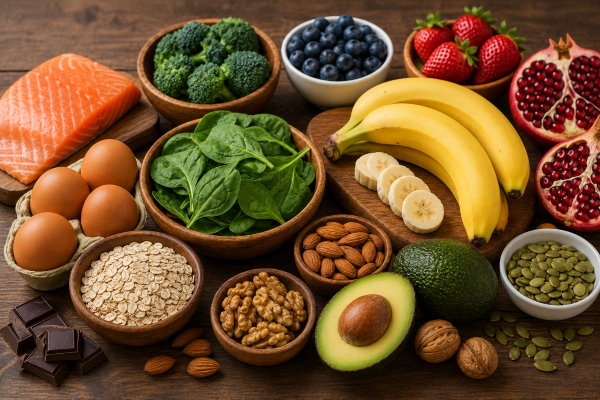
Premature Ejaculation (PE) is the persistent inability to delay ejaculation in a way that causes distress, affecting an estimated 20 to 30% of men. Diet is not a standalone cure, but certain foods do address some of the specific nutritional and physiological factors linked to PE — low zinc, low magnesium, low Vitamin B12, and impaired serotonin regulation. This article covers which foods for premature ejaculation, what that evidence actually shows, and how diet fits alongside medical and behavioural treatment.
Important: No food cures Premature Ejaculation. The foods below can help correct specific nutritional deficiencies that are associated with PE in some men, and support the broader hormonal and vascular health that underlies sexual function generally. They work best as part of a comprehensive approach alongside behavioural techniques and, where needed, medical treatment — not as a substitute for either.
Serotonin is one of the primary neurotransmitters regulating ejaculatory control — it’s the reason SSRIs (which increase serotonin availability) are among the most effective medical treatments for PE. This is also why some of the most evidence-relevant foods for PE are the same ones known to support serotonin production and mood regulation more broadly, rather than foods marketed specifically as ‘PE foods.’
What Causes Premature Ejaculation?
PE has a genuinely varied set of contributing causes, and understanding which applies to you helps explain why diet can be a relevant, partial piece of the picture rather than a complete answer:
- Low serotonin activity or altered serotonin receptor sensitivity — the primary neurobiological mechanism target of SSRI treatment
- Performance anxiety, stress, and depression
- Low testosterone or other hormonal imbalances
- Hypertension and Diabetes, both of which can affect nerve and vascular function relevant to ejaculatory control
- Zinc, magnesium, or Vitamin B12 deficiency, in some studies associated with PE
- Nerve hypersensitivity, particularly in lifelong PE
Diagnosing the underlying cause with a doctor is the most reliable path to effective treatment. Diet is most likely to help where a genuine nutritional deficiency or a manageable contributing condition (like hypertension) is present.
Foods for Premature Ejaculation
Oysters — Zinc, Vitamin B12, and Selenium
Oysters are the richest dietary source of zinc of any common food. Zinc plays a role in testosterone synthesis, and some research has associated low zinc status with reduced ejaculatory control, making correcting a genuine deficiency a reasonable dietary target for men with confirmed low zinc.
Oysters are also a good source of Vitamin B12. Some studies have found lower B12 levels in men with PE compared to men without it — though this is an association rather than proof that B12 supplementation resolves PE, and more research is needed to establish a direct causal or treatment relationship.
Oysters additionally provide selenium. The connection between selenium and PE is considerably weaker and more indirect than the zinc and B12 evidence — it rests on selenium’s general role in mood regulation and the observation that depression is a risk factor for PE, rather than any direct study linking selenium intake to ejaculatory control. This link should be treated as speculative rather than established.
If depression is a contributing factor to your PE, that’s a conversation for a doctor — potentially including antidepressants such as Dapoxetine, which is specifically developed for PE treatment — rather than something to address through diet alone.
Fatty Fish — Omega-3s, Serotonin, and Testosterone
Fatty fish such as salmon, mackerel, trout, and tuna are excellent sources of omega-3 fatty acids, which are associated with improved cardiovascular health and may help manage high blood pressure — one of the medical conditions linked to PE. Omega-3s also play a role in mood regulation and may support healthy serotonin signalling, which is directly relevant given serotonin’s central role in ejaculatory control.
Salmon is also a good source of Vitamin D (associated with mood regulation in some studies) and high-quality protein. Some preliminary research has examined a possible link between fish oil intake and testosterone levels, but the evidence here is limited and inconsistent — this should be treated as an area of ongoing research rather than an established effect.
Nuts, Seeds, and Leafy Vegetables — Magnesium and Antioxidants
- Almonds: A source of Vitamin E and healthy fats. Some research suggests almonds may help reduce oxidative stress and inflammation, both loosely linked to anxiety — one of the psychological contributors to PE.
- Pistachios: Nutrient-dense and supportive of general cardiovascular and blood pressure health.
- Carrots and celery: Support healthy blood pressure as part of a balanced diet.
- Spinach and Swiss chard: Rich in magnesium, which plays a role in nerve and muscle function and has been linked to testosterone regulation in some studies. Some research associates low magnesium status with PE, making magnesium-rich leafy greens a reasonable dietary target.
Serotonin-Supporting Foods
Since serotonin is central to the ejaculatory reflex — the mechanism SSRIs and Dapoxetine directly target — foods that support serotonin production deserve mention, though this is an indirect and general dietary strategy rather than a proven PE-specific intervention.
- Tryptophan-rich foods: Turkey, eggs, cheese, oats, and seeds provide tryptophan, the amino acid precursor the body converts into serotonin.
- Complex carbohydrates: Whole grains eaten alongside tryptophan-rich foods can support tryptophan’s uptake into the brain.
- Omega-3 fatty acids: As above, with some evidence supporting a role in healthy serotonin signalling.
No dietary intervention raises serotonin activity to the degree an SSRI or Dapoxetine does — these foods support general serotonergic health rather than functioning as a food-based substitute for medication in men who need it.
Foods and Nutrients With Weaker or No Evidence
Some foods circulate in online PE content — dark chocolate, bananas, avocados — without strong direct evidence specifically for ejaculatory control. This doesn’t mean they’re unhealthy or worthless: bananas provide potassium and B6 relevant to general cardiovascular and hormonal health, dark chocolate (70%+ cocoa) contains flavanols supportive of vascular function, and avocados provide healthy fats. But none has a specific, well-established evidence base for treating PE directly, and readers should be sceptical of any list that presents them as a proven PE remedy.
Caution: Some foods for premature ejaculation can interact with medications used to manage conditions linked to PE, such as blood pressure medicines. Talk to your doctor before making significant dietary changes specifically to manage PE, particularly if you take any prescription medication.
Is There a Permanent Solution for PE?
PE is not typically described as something that is permanently “cured” in the way an infection is cured — but it is highly treatable, and many men achieve durable, satisfying improvement, particularly with combined behavioural and medical approaches. The available treatment options include:
- Dapoxetine: The only medication specifically developed for on-demand PE treatment, approved in the UK, EU, Australia, and many other markets. Not FDA-approved in the United States.
- Daily SSRIs (paroxetine, sertraline): Used off-label for PE, particularly in the US where Dapoxetine is unavailable. Require 1 to 2 weeks of daily dosing before full effect.
- PDE5 inhibitors (Sildenafil and others): Primarily indicated for Erectile Dysfunction, but sometimes helpful for men with co-existing ED and PE, since resolving anxiety around maintaining an erection can reduce the pressure driving early ejaculation.
- Behavioural techniques: The stop-start and squeeze techniques, and pelvic floor (Kegel) exercises, all have supporting evidence for improving ejaculatory control.
- Topical anaesthetics: Lidocaine or benzocaine sprays reduce penile sensitivity and are a first-line option in several clinical guidelines.
Effects from medication typically depend on continued use — stopping treatment can allow symptoms to return, which is a normal characteristic of managing an ongoing condition rather than a sign that the treatment failed. A doctor can help build a sustainable, individualised treatment plan.
Conclusion
Diet has a real, if modest and partial, role to play in managing Premature Ejaculation — particularly through correcting genuine deficiencies in zinc, magnesium, and Vitamin B12, and supporting the cardiovascular and serotonergic health that underlies ejaculatory control. Oysters, fatty fish, nuts, and leafy greens are reasonable, evidence-grounded additions to a diet aimed at supporting sexual health. But none of them cures PE, and claims suggesting otherwise should be treated with scepticism.
For most men with persistent, distressing PE, the most effective path combines behavioural techniques, addressing any underlying medical or psychological cause, and — where appropriate — evidence-based medication such as Dapoxetine or daily SSRIs, all guided by a doctor rather than diet alone.
Frequently Asked Questions
- What foods stop early ejaculation?
No food stops or cures early ejaculation outright. Foods with the most relevant, evidence-grounded connection include oysters (zinc, Vitamin B12), fatty fish like salmon (omega-3s, serotonin support), and magnesium-rich leafy greens like spinach. These support the nutritional and physiological factors associated with PE in some men, but they work as a supportive measure alongside — not a replacement for — behavioural techniques or medical treatment where needed.
- How can I permanently cure my PE with food?
Food alone cannot permanently cure PE, and no single food or diet has been shown to eliminate it. PE is best described as a highly treatable condition rather than one with a permanent ‘cure’ through diet. Combining a nutrient-supportive diet with behavioural techniques (like the stop-start method or pelvic floor exercises) and, where needed, medical treatment such as Dapoxetine gives the most reliable and durable results.
- Are there other remedies for Premature Ejaculation apart from food?
Yes. Dapoxetine is the medication specifically developed for on-demand PE treatment and has strong supporting evidence. Daily SSRIs, topical anaesthetic sprays, and behavioural techniques including the stop-start technique, the squeeze technique, and pelvic floor (Kegel) exercises all have evidence supporting their use. A doctor can help identify which combination is most appropriate based on the underlying cause and severity.
- Are there any side effects from eating these foods?
The foods discussed — oysters, fatty fish, nuts, and leafy greens — are generally safe as part of a balanced diet for most people. As with any dietary change, those with shellfish allergies should avoid oysters, and anyone on blood pressure medication or blood thinners should check with a doctor before significantly increasing intake of foods like fatty fish or leafy greens, since some can interact with these medications.
- Which fish is best for Premature Ejaculation?
Salmon, mackerel, trout, and tuna are all good sources of omega-3 fatty acids and high-quality protein. These support cardiovascular health and blood pressure management, and may support healthy serotonin signalling — both relevant to the broader physiological picture around PE. No single fish has specific proven superiority for PE treatment; the benefit comes from the overall nutrient profile rather than any one species being uniquely effective.
This article is for general informational purposes only and does not constitute medical advice. If you are experiencing Premature Ejaculation, consult a qualified healthcare provider for a proper diagnosis and treatment plan.
