
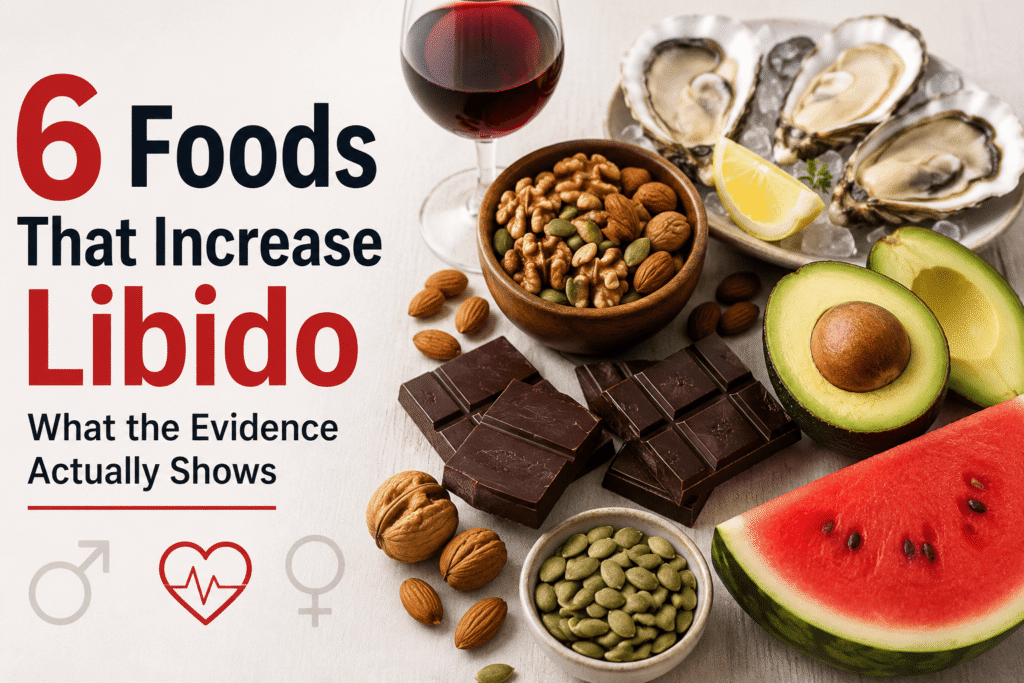
Diet is easy to overlook when thinking about sexual health, but what you eat genuinely does play a role — supporting the hormonal balance, blood circulation, and mood that libido depends on. This article covers six foods that increase libido with a real, evidence-grounded connection to sexual desire, and what that evidence realistically supports (and doesn’t).
Note: Most of the mechanistic research behind these foods — particularly the blood-flow and Nitric Oxide pathways — has been studied primarily in men. The hormonal and mood-related mechanisms (zinc, tryptophan/serotonin, stress reduction) apply more broadly across genders, but it’s worth being aware that the evidence base isn’t equally robust for everyone in every case.
Oysters
Oysters have long had a reputation as a libido-boosting food, and there’s a reasonable mechanistic basis for it. They’re one of the richest dietary sources of zinc, a mineral directly involved in testosterone production in men and broader hormonal regulation in women. Low zinc status has been associated with reduced hormone levels, and hormonal balance is closely tied to sexual desire.
Oysters also contain D-aspartic acid, an amino acid that has been studied for a potential role in stimulating luteinising hormone and testosterone release. The evidence here is preliminary and mostly limited to small studies, so it’s worth treating as a plausible contributing factor rather than a guaranteed effect.
Nuts and Seeds
Walnuts, sunflower seeds, and pumpkin seeds are rich in omega-3 fatty acids, which support the body’s production of sex hormones and also play a role in Nitric Oxide synthesis — the same vasodilating molecule central to genital blood flow and arousal in both men and women. Better circulation supports the physical side of sexual response, which in turn can support desire.
Dark Chocolate
Dark chocolate contains Phenylethylamine, a compound associated with the release of endorphins — the body’s natural “feel-good” chemicals — and flavonoids, antioxidants that support cardiovascular health and blood flow. Good circulation is relevant to sexual function generally, and the mood-lifting effect may indirectly support desire, particularly when stress or low mood is part of the picture. Choose a variety with at least 70% cocoa content for the most flavonoids relative to added sugar.
Avocados
Avocados are rich in monounsaturated fats, which support cardiovascular health and healthy blood flow — both relevant to sexual function. They’re also a good source of Vitamin B6, involved in the body’s production of serotonin, a neurotransmitter linked to mood regulation. Supporting mood and reducing stress can have a real, if indirect, effect on sexual desire.
Watermelon
Watermelon is low in calories and rich in L-citrulline, an amino acid the body converts into L-arginine and, from there, into Nitric Oxide — the vasodilator responsible for relaxing blood vessels and improving blood flow throughout the body, including to the genitals. Better genital blood flow supports the physical arousal response, which is closely linked to desire.
Red Wine (in Moderation)
Moderate red wine consumption has been associated with several markers relevant to sexual health in observational research. Red wine is rich in polyphenols, including resveratrol, which support cardiovascular health and circulation. Alcohol in moderate amounts can also have a mild relaxing effect that reduces stress and social inhibition — both relevant to desire in the moment.
Important: The word “moderate” is doing a lot of work here. Excessive alcohol consistently reduces sexual desire and function rather than enhancing it — it depresses the central nervous system, impairs the physical arousal response, and with chronic heavy use, lowers testosterone. If you’re considering red wine for its libido-related benefits, that means a glass, not a bottle.
Beyond Diet — What Else Affects Libido
Diet is one piece of a larger picture. Regular exercise supports libido by improving blood flow, boosting energy, and supporting a positive body image. Adequate sleep supports healthy hormone regulation. Managing chronic stress matters significantly, since elevated cortisol directly suppresses sexual desire in both men and women. None of these foods or habits work in isolation — they’re most effective as part of an overall pattern of health, not a single fix.
When to See a Doctor
Dietary and lifestyle changes can meaningfully support libido, but they’re not a substitute for medical evaluation when low desire is persistent, distressing, or came on suddenly. Low libido can have hormonal (thyroid, testosterone, menopause-related), psychological (depression, anxiety, relationship factors), or medication-related causes (many antidepressants, for example, reduce libido as a side effect) that diet alone won’t resolve. A doctor can help identify the actual underlying cause and discuss appropriate options, which may include addressing an underlying condition, adjusting a medication, therapy, or — where appropriate — an FDA-approved medication such as Flibanserin (Addyi) for premenopausal and certain postmenopausal women with Hypoactive Sexual Desire Disorder.
Caution: Be cautious of unregulated products marketed as libido enhancers, particularly those sold without a prescription requirement. Some contain undisclosed active ingredients — including, in some cases, Sildenafil, which is not FDA-approved for female sexual dysfunction and carries its own contraindications and interaction risks. “Natural” or “herbal” labelling doesn’t guarantee a product is safe or regulated. Discuss any product with a doctor before using it, and be sceptical of anything promising guaranteed or dramatic results.
Conclusion
Oysters, nuts and seeds, dark chocolate, avocados, watermelon, and red wine in moderation all have a genuine, evidence-grounded connection to the biological processes behind libido — hormonal balance, blood flow, and mood. None of them is a guaranteed fix, and the evidence for several of these mechanisms is stronger in men than it is specifically for women. Diet works best as part of a broader pattern that includes regular exercise, adequate sleep, and stress management, and it’s not a substitute for medical advice when low desire is persistent or distressing. If that’s your situation, a conversation with a doctor is the most reliable next step.
Frequently Asked Questions
-
Can diet really enhance libido?
Yes, to a meaningful but modest degree. Certain nutrients found in foods support hormonal balance, blood flow, and mood — all of which are genuinely connected to sexual desire. Diet works gradually and as part of an overall healthy pattern, rather than producing an immediate or dramatic effect on its own.
-
Are there foods I should avoid if I’m trying to improve libido?
Highly processed foods, excessive alcohol, and excessive caffeine can all negatively affect sexual health over time — processed foods through their broader impact on cardiovascular health, and both alcohol and caffeine through effects on the nervous system and sleep quality when consumed in excess.
-
How quickly can I expect results after changing my diet?
Dietary changes tend to work gradually rather than producing an immediate effect. A consistent, balanced diet sustained over weeks to months is more likely to support meaningful, lasting improvement than any single food eaten occasionally.
-
Can these foods replace medication for low libido?
No. While these ffoods that increase libido as part of a healthy diet, they shouldn’t replace professional medical advice — particularly if low desire is significant, persistent, or distressing. A healthcare professional can identify the underlying cause and discuss appropriate treatment, which diet alone may not address.
-
Can these foods help with Erectile Dysfunction?
They may offer some supportive benefit through improved circulation, but they’re not a reliable standalone treatment for ED, which can have several distinct underlying causes — vascular, hormonal, neurological, or psychological. If you’re experiencing persistent ED, it’s best to get a proper medical evaluation rather than relying on diet alone.
-
Is exercise also beneficial for libido?
Yes. Regular exercise supports libido by improving blood flow, boosting energy levels, supporting healthy testosterone and hormone regulation, and promoting a more positive body image — all of which are genuinely connected to sexual desire.
-
Do these foods work for both men and women?
Many of the underlying mechanisms — hormonal balance, blood flow, and mood support — are relevant across genders, so these foods can meaningfully support overall sexual health for both. That said, some of the specific research (particularly around Nitric Oxide and blood flow) has focused more heavily on male sexual function, so the evidence base isn’t identically robust in every case.
This article is for general informational purposes only and does not constitute medical advice. If you are experiencing persistent low libido, consult a qualified healthcare provider.
