
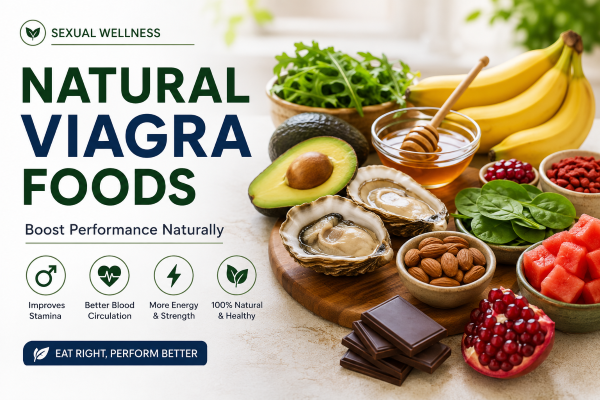
Natural Viagra foods are a genuine category of nutritional support for erectile function — not a gimmick. Certain foods contain compounds that directly support the same biological pathways that underpin erections: Nitric Oxide production, blood vessel health, testosterone support, and cardiovascular function. The evidence for a food-first approach to erectile health has grown considerably, with a major Harvard study finding that higher intake of flavonoid-rich fruits is associated with a 19% lower risk of Erectile Dysfunction in men under 70. Diet does not work as quickly or as directly as prescription Sildenafil — but unlike medication, it addresses the underlying vascular and hormonal conditions that cause ED rather than managing symptoms per dose. This article covers 15 natural Viagra foods with the mechanism behind each one, the best way to consume them, and what to avoid — plus honest context for expectations and when medical evaluation remains the right call.
A 2016 Harvard study published in the American Journal of Clinical Nutrition followed 25,096 men over 10 years and found that those with the highest intake of flavonoid-rich foods — including berries, citrus fruit, and red wine — had a 19% lower risk of Erectile Dysfunction compared with men with the lowest intake. The effect was particularly strong in men under 70. Foods rich in anthocyanins and flavanones showed the greatest association.
Why Diet Affects Erectile Function
Erectile Dysfunction and cardiovascular disease share the same root cause: impaired blood vessel function. The arteries supplying the penis are small — approximately 1 to 2 mm in diameter — and they are among the first in the body to show the effects of endothelial damage, atherosclerosis, and poor Nitric Oxide production. This means that the same dietary habits that damage or protect the heart also damage or protect the ability to achieve and maintain an erection.
A diet high in saturated fat, refined sugar, processed food, and excess alcohol contributes to insulin resistance, arterial inflammation, low testosterone, and reduced Nitric Oxide bioavailability — all of which impair erections. A diet rich in Nitric Oxide precursors, antioxidants, healthy fats, zinc, and L-arginine supports the opposite: flexible, responsive blood vessels and a hormonal environment that supports sexual function.
Diet works slowly but durably. It does not produce an erection within 30 to 60 minutes the way Sildenafil does — but consistent dietary improvements over weeks and months address the underlying cause of ED rather than just managing its symptoms.
The Three Mechanisms Natural Viagra Foods Work Through
Understanding the mechanisms helps explain why specific foods matter and why variety across all three pathways is more effective than focusing on a single food.
- Nitric Oxide production and blood vessel relaxation: Nitric Oxide (NO) is the chemical signal that starts the erection process — it causes penile blood vessels to dilate and fill with blood. Foods rich in dietary nitrates (leafy greens, beetroot), L-arginine (nuts, seeds, poultry), L-citrulline (watermelon), and flavanols (dark chocolate, berries) all support NO production or protect it from oxidative breakdown.
- Cardiovascular and endothelial health: The endothelium — the inner lining of blood vessels — is responsible for NO production and for keeping arteries flexible and responsive. Omega-3 fatty acids (fatty fish), antioxidants (berries, pomegranate, green tea), and monounsaturated fats (avocado, olive oil) all support endothelial function and reduce the arterial inflammation that impairs erections.
- Testosterone and hormonal support: Testosterone supports libido, arousal, and the neurological pathways behind erections. Zinc (oysters, pumpkin seeds), healthy fats (avocado, nuts, olive oil), and magnesium (leafy greens, dark chocolate) all support healthy testosterone production and maintenance.
The 15 Best Natural Viagra Foods for Erections
1. Watermelon — nature’s citrulline source
Watermelon is rich in L-citrulline, an amino acid the body converts to L-arginine and then to Nitric Oxide. Some researchers have described it as a mild natural vasodilator for this reason. Unlike L-arginine supplements, which are broken down extensively in the gut before reaching the bloodstream, L-citrulline from watermelon is absorbed more efficiently. The rind contains the highest concentration of L-citrulline — significantly more than the flesh — so blended watermelon drinks that include rind are more effective than eating the flesh alone.
How to use: 2 to 3 cups of blended watermelon (including some rind) daily. Combine with pomegranate juice for additive Nitric Oxide support.
2. Leafy greens — the highest dietary nitrate source
Dark leafy greens — particularly rocket (arugula), spinach, Swiss chard, and kale — are among the richest dietary sources of nitrates. The body converts these nitrates to Nitric Oxide via a bacterial-enzymatic pathway in saliva and the digestive tract. This pathway is entirely separate from the L-arginine pathway, meaning nitrate-rich greens and L-arginine-rich foods work through complementary mechanisms and are more effective combined.
Rocket (arugula) has one of the highest nitrate contents of any food — higher even than spinach. Eating these greens raw or only lightly cooked preserves nitrate content, as high heat can reduce it.
How to use: Include raw leafy greens in salads daily. Add spinach or rocket to smoothies, eggs, or soups.
3. Beetroot — concentrated dietary nitrate
Beetroot is the single food with the highest concentration of inorganic nitrates after rocket and spinach. It has been extensively studied for athletic performance — specifically because its nitrate content increases Nitric Oxide availability and improves oxygen delivery to muscles through the same vascular mechanism that supports erections. Beetroot juice studies have shown measurable increases in blood Nitric Oxide within 2 to 3 hours of consumption.
How to use: 250 ml of beetroot juice 2 to 3 hours before activity, or include roasted or raw beetroot in meals 4 to 5 times per week.
4. Fatty fish (salmon, mackerel, sardines) — vascular health and Nitric Oxide
Fatty fish are rich in omega-3 fatty acids (EPA and DHA), which support endothelial function, reduce triglycerides and arterial inflammation, and help maintain arterial flexibility. Omega-3s also support Nitric Oxide production from the endothelial lining of blood vessels. The American Heart Association’s recommendation of two servings per week is both a cardiovascular guideline and an erectile health guideline — the same mechanism underpins both benefits.
How to use: 2 servings of approximately 3.5 oz (100 g) per week. Bake, grill, or steam rather than frying to preserve omega-3 content.
5. Pomegranate — antioxidant protection for Nitric Oxide
Pomegranate has one of the highest antioxidant capacities of any fruit, primarily from punicalagins and anthocyanins. These antioxidants protect Nitric Oxide from being broken down by free radicals — effectively extending the action of the NO already present. A pilot randomised controlled trial in the International Journal of Impotence Research found that pomegranate juice improved erectile function scores compared with placebo, though the study was small. Larger studies support its general cardiovascular benefit.
How to use: 240 ml of 100% pomegranate juice daily, or include fresh pomegranate arils in salads or breakfast.
6. Oysters — zinc and dopamine support
Oysters are the single richest dietary source of zinc — one medium oyster provides approximately 5 to 6 mg, against a daily requirement of 11 mg for adult men. Zinc is essential for testosterone synthesis: severe zinc deficiency consistently reduces testosterone, and supplementation in deficient men restores it. Oysters also contain amino acids (particularly D-aspartic acid) that support dopamine production — the neurotransmitter involved in sexual desire and the initiation of arousal.
How to use: 6 to 12 medium oysters once or twice a week, raw or lightly steamed. A squeeze of lemon improves zinc absorption.
7. Avocado — healthy fats and testosterone support
Avocados provide monounsaturated fats, the same class of healthy fat as olive oil, which are essential precursors for steroid hormone production — including testosterone. They also provide potassium (which helps relax blood vessels), vitamin B6 (which supports testosterone metabolism), vitamin E (a fat-soluble antioxidant protecting against oxidative stress in blood vessels), and zinc.
How to use: Half to one avocado daily as part of a balanced diet, paired with other nutrient-rich vegetables to maximise absorption of fat-soluble compounds.
8. Nuts and seeds — L-arginine, zinc, and magnesium
Nuts and seeds provide L-arginine (a direct Nitric Oxide precursor), healthy fats, zinc, and magnesium. A standout study: a 2011 study in the International Journal of Impotence Research found that men who ate 100 g of pistachios daily for three weeks showed statistically significant improvement in IIEF erectile function scores, along with improved cholesterol profiles.
- Pistachios — highest L-arginine content of common nuts; strongest clinical evidence for ED
- Walnuts — rich in L-arginine and omega-3 ALA; support endothelial function
- Almonds — rich in vitamin E and zinc; support testosterone and vascular health
- Pumpkin seeds — one of the best plant sources of zinc and magnesium; also contain L-arginine
- Flaxseeds — high in omega-3 ALA and lignans; anti-inflammatory
How to use: 1 oz (about 28 g or a small handful) of nuts or seeds daily. Choose raw or dry-roasted, unsalted varieties.
9. Dark chocolate (70%+ cocoa) — flavanols and Nitric Oxide
Dark chocolate contains flavanols — plant compounds that stimulate the endothelial lining of blood vessels to produce Nitric Oxide. Multiple studies have shown that high-flavanol cocoa improves flow-mediated dilation (a measure of blood vessel responsiveness) within 2 hours of consumption. The key is cocoa content: 70% cocoa or higher retains meaningful flavanol levels. Dutch-processed (alkalized) chocolate, regardless of cocoa percentage, has significantly reduced flavanol content due to the alkalisation process.
How to use: 20 to 30 g (about 1 oz) of dark chocolate with 70% or higher cocoa content daily, in moderation. Choose products listing cocoa or cacao as the first ingredient.
10. Berries — anthocyanins and the Harvard 19% finding
The Harvard study cited in the ‘Did you know?’ box was driven largely by the anthocyanin and flavanone content of berries and citrus fruit. Blueberries, blackberries, strawberries, and raspberries are particularly rich in anthocyanins — the compounds that give berries their deep colours and that stimulate Nitric Oxide-producing enzymes while reducing oxidative stress in blood vessel walls. The 19% lower risk of ED associated with high flavonoid intake was one of the most impactful dietary findings on erectile health in recent years.
How to use: 1 cup of fresh or frozen berries daily. Frozen berries retain most of their anthocyanin content, making them as nutritionally effective as fresh.
11. Garlic — allicin and blood pressure
Garlic contains allicin, a sulfur compound that forms when garlic is crushed or chopped. Allicin supports Nitric Oxide production, reduces LDL cholesterol oxidation, and has modest blood-pressure-lowering effects — all cardiovascular benefits that directly support erectile function. The catch: allicin forms only when a crushing enzyme (alliinase) contacts the alliin compound. This reaction occurs when garlic is crushed, but is destroyed by immediate high heat.
How to use: Crush or chop 1 to 2 cloves of fresh garlic, wait 10 minutes (to allow allicin to form fully), then use raw or add to food at the end of cooking to preserve allicin.
12. Poultry — L-arginine and B vitamins
Skinless chicken and turkey breast are among the richest non-supplement sources of L-arginine, the direct dietary precursor to Nitric Oxide. Poultry liver is particularly concentrated. They also provide vitamins B6 and B12, which support homocysteine metabolism — elevated homocysteine is an independent risk factor for cardiovascular disease and has been associated with ED. Lean poultry supports erectile health through multiple converging pathways.
How to use: 2 to 3 servings of skinless lean poultry per week. Bake, grill, or steam rather than frying.
13. Coffee — chlorogenic acids and vascular protection
A large epidemiological study using NHANES data found that men who consumed 2 to 3 cups of coffee daily had a lower prevalence of ED than non-coffee drinkers, with the association strongest in overweight and obese men. Coffee’s chlorogenic acids and polyphenols protect blood vessels from oxidative damage, and caffeine has a mild vasodilating effect at moderate doses. Importantly, this association was not seen with decaffeinated coffee in the same study, suggesting caffeine contributes directly.
How to use: 2 to 3 cups of black coffee daily. Limiting added sugar and high-fat creamers preserves cardiovascular benefit. Men with heart disease, uncontrolled hypertension, or anxiety should discuss appropriate caffeine intake with their doctor.
14. Pomegranate — bonus: listed separately from berries for search coverage
(See entry #5 above — pomegranate is listed here as a separate search term given its high individual search volume for sexual health topics.)
14. Green tea — EGCG and endothelial support
Green tea is rich in epigallocatechin gallate (EGCG), a catechin polyphenol with strong evidence for improving endothelial function. EGCG increases Nitric Oxide production from the endothelial lining of blood vessels and reduces oxidative stress that degrades NO. Several studies have found improvements in flow-mediated dilation — a measure of blood vessel responsiveness — after consistent green tea consumption. 2 to 4 cups per day is the range studied in most clinical research.
How to use: 2 to 4 cups of green tea daily, brewed from loose leaf or high-quality tea bags. Avoid adding milk, which may bind polyphenols and reduce absorption.
15. Honey — nitric oxide boosting and energy
Honey — particularly raw, unprocessed honey — contains chrysin, a flavonoid with modest aromatase-inhibiting properties that may support testosterone levels by reducing the conversion of testosterone to oestrogen. Honey also contains boron, a trace mineral associated with testosterone support, and provides simple carbohydrates that support short-term energy. The evidence for honey specifically improving erectile function is limited, but it is a nutrient-dense, low-processed sweetener that aligns well with an ED-protective diet when used in moderation.
How to use: 1 to 2 teaspoons of raw honey as a natural sweetener in place of refined sugar.
Foods to Avoid If You Have Erectile Dysfunction
Diet affects erectile function in both directions. These foods and eating patterns actively impair the same vascular mechanisms that natural Viagra foods support:
- Processed and fried foods: High in trans fats and refined carbohydrates that promote arterial inflammation, insulin resistance, and endothelial damage — directly impairing blood vessel responsiveness.
- Added sugar and refined carbohydrates: Drive insulin resistance, which reduces testosterone and impairs Nitric Oxide production from the endothelium. High sugar intake is associated with both cardiovascular disease and ED independently.
- Excessive salt: Raises blood pressure, which damages arterial walls over time and reduces the responsiveness of blood vessels required for erection.
- Excessive alcohol: Acute heavy drinking depresses the nervous system and can prevent erections (‘whisky dick’). Chronic heavy drinking causes vascular and nerve damage and lowers testosterone.
- Soy in very high quantities: Phytoestrogens in soy may modestly reduce testosterone at very high intakes (e.g. multiple servings of processed soy daily). Moderate soy consumption (tofu, edamame) is not a concern for most men.
- Liquorice: Contains glycyrrhizin, which has been shown in studies to reduce testosterone at high intakes. Not a concern at culinary amounts but relevant for men consuming liquorice supplements or very high quantities.
Important note on grapefruit: Grapefruit and grapefruit juice inhibit CYP3A4, the liver enzyme that breaks down Sildenafil. If you take prescription Viagra or generic Sildenafil, avoid grapefruit on the day of your dose — it can raise Sildenafil blood levels unpredictably and increase the risk of side effects including headache, flushing, dizziness, and low blood pressure. This grapefruit interaction does not apply to dietary changes alone.
How Long Do Dietary Changes Take to Improve Erections?
This section is absent from the original article and most competitors — and it sets realistic expectations that prevent men from abandoning effective dietary approaches too early.
- Acute effects (within hours): Nitrate-rich foods (beetroot, leafy greens) increase blood Nitric Oxide within 2 to 3 hours of consumption. Flavanols from dark chocolate improve flow-mediated dilation within 2 hours. These are not erection-producing effects like a PDE5 inhibitor — they are subtle vascular improvements. However, eating a nitrate-rich meal a few hours before sexual activity may modestly support erection quality.
- Short-term (2–4 weeks): The pistachio study showed significant IIEF improvements in 3 weeks. Reduction in alcohol and stopping smoking show measurable endothelial improvement within 2 to 4 weeks.
- Medium-term (4–12 weeks): Consistent dietary improvement — moving toward a Mediterranean-pattern diet — produces measurable improvements in endothelial function, cholesterol, and blood pressure within 4 to 12 weeks, all of which correlate with improved erection quality.
- Long-term (3–6 months and beyond): Dietary changes that reduce atherosclerosis, insulin resistance, and chronic inflammation produce meaningful and sustained improvements in erectile function. The Harvard flavonoid study effect was measured over 10 years of eating patterns.
Tips to Maximise the Benefits of Natural Viagra Foods
Natural Viagra foods work best as part of a broader lifestyle approach. These habits compound their vascular and hormonal benefits:
- Follow a Mediterranean-pattern diet: The overall dietary pattern has more evidence than any single food. Rich in vegetables, fruits, whole grains, legumes, fish, olive oil, and nuts — with minimal processed food, red meat, and refined sugar.
- Exercise regularly: At least 150 minutes of moderate aerobic activity weekly. Exercise improves endothelial function and Nitric Oxide availability — the same pathway these foods work through.
- Quit smoking: Smoking destroys endothelial cells and depletes Nitric Oxide. It counteracts the benefits of every food on this list. Quitting produces measurable improvements in erectile function within weeks.
- Prioritise sleep: Testosterone is primarily produced during deep sleep. 7 to 9 hours per night supports the hormonal side of erectile function that food alone cannot fully address.
- Manage stress: Chronic cortisol elevation suppresses testosterone and impairs the arousal signal required for erections. Mindfulness, yoga, and regular physical activity all reduce cortisol.
- Maintain a healthy weight: Obesity is associated with low testosterone, insulin resistance, and vascular inflammation — all of which impair erections. Weight loss through diet and exercise shows documented improvement in erectile function.
When Natural Viagra Foods Are Not Enough
Natural Viagra foods are genuinely beneficial — but they are not a complete substitute for medical evaluation or prescription treatment when ED is persistent, sudden in onset, or accompanied by other symptoms.
See a doctor if:
- ED persists despite consistent dietary and lifestyle improvements over 2 to 3 months
- ED is sudden in onset or significantly worsened — this can signal cardiovascular disease, hormonal change, or a medication side effect
- ED is accompanied by low libido, fatigue, or mood changes — which may indicate low testosterone
- ED is accompanied by chest pain, shortness of breath, or cardiovascular symptoms — seek urgent evaluation
Prescription PDE5 inhibitors (Sildenafil, Tadalafil, Vardenafil, Avanafil) are the evidence-based first-line medical treatment for ED and can be used alongside dietary improvements rather than instead of them. They address the mechanism in the short term while diet and lifestyle address the cause over the longer term.
Conclusion
Natural Viagra foods work through three well-established mechanisms — Nitric Oxide production, cardiovascular and endothelial health, and testosterone support — and the evidence base for a dietary approach to erectile health has strengthened considerably, headlined by the Harvard study showing a 19% lower ED risk with high flavonoid intake.
The 15 foods covered here — watermelon, leafy greens, beetroot, fatty fish, pomegranate, oysters, avocado, nuts and seeds, dark chocolate, berries, garlic, poultry, coffee, green tea, and honey — each contribute through specific, evidence-based mechanisms. No single food is a cure, and none work as quickly as prescription Sildenafil. But as a consistent dietary pattern, they address the vascular and hormonal foundations of erectile function in a way that medication alone does not.
Combined with regular exercise, adequate sleep, stress management, and not smoking, a natural Viagra food approach is one of the most durable and broadly beneficial things a man can do for his sexual health — regardless of whether prescription ED treatment is also appropriate.
Frequently Asked Questions
- Which foods should men avoid if they have Erectile Dysfunction?
Men with ED should limit or avoid processed and fried foods, refined sugar and refined carbohydrates, excessive salt, heavy alcohol, and very high quantities of processed soy. These foods promote arterial inflammation, insulin resistance, high blood pressure, and low testosterone — all of which directly impair the vascular mechanism behind erections. Grapefruit should be avoided on any day prescription Sildenafil is taken.
- Is there a food that is better than Viagra?
No food produces the same acute, reliable effect as prescription Sildenafil, which works within 30 to 60 minutes and is effective in approximately 83% of attempts. However, a consistent diet rich in natural Viagra foods — particularly a Mediterranean-pattern diet — has been associated with a significantly lower long-term risk of developing ED and with meaningful improvements in existing ED when combined with exercise and lifestyle changes. Foods address the cause; Sildenafil manages the symptom.
- What is the cucumber trick for men?
The cucumber trick is a wellness trend suggesting cucumbers support erectile function or blood flow. Cucumbers provide hydration, vitamin K, and some antioxidants, but there is no clinical evidence that they directly improve erections. They are a healthy, low-calorie food but not a meaningful natural Viagra food in the way watermelon, beetroot, or leafy greens are.
- How can I get more blood flow to the penis naturally?
The most evidence-based dietary approaches to improving penile blood flow are: eating nitrate-rich foods (beetroot, rocket, spinach, leafy greens), consuming L-citrulline-rich foods (watermelon), adding flavonoid-rich fruits (berries, pomegranate), including omega-3 fatty acids (fatty fish), and maintaining a Mediterranean-pattern diet overall. Combining these with regular aerobic exercise, not smoking, and limiting alcohol produces the greatest improvement.
- How long does it take for natural Viagra foods to work?
Acute Nitric Oxide effects from beetroot and leafy greens can appear within 2 to 3 hours of eating. Short-term improvements in erection quality may be noticeable within 2 to 4 weeks of consistent dietary change. Meaningful long-term improvement in erectile function from sustained dietary improvement typically builds over 4 to 12 weeks and continues accumulating over months. Diet works more slowly than medication but produces more durable improvements by addressing the underlying cause.
Citations
- Cassidy A, et al. Dietary flavonoid intake and incidence of erectile dysfunction. American Journal of Clinical Nutrition, 2016. https://pubmed.ncbi.nlm.nih.gov/26762373/
- Gurbuz N, et al. Pistachio diet improves erectile function parameters. International Journal of Impotence Research, 2011. https://pubmed.ncbi.nlm.nih.gov/21042082/
- Forest CP, et al. Efficacy and safety of pomegranate juice on improvement of erectile dysfunction in male patients with mild to moderate erectile dysfunction. International Journal of Impotence Research, 2007. https://pubmed.ncbi.nlm.nih.gov/17568759/
- Lopez DS, et al. Role of caffeine intake on erectile dysfunction. PLOS ONE, 2015. https://pubmed.ncbi.nlm.nih.gov/25973248/
- Medical News Today. What foods can help combat erectile dysfunction? https://www.medicalnewstoday.com/articles/322508
- 7 Foods and Supplements with Benefits Similar to Viagra. https://www.healthline.com/nutrition/natural-viagra
- Can Diet Affect My Risk of Erectile Dysfunction? https://www.webmd.com/erectile-dysfunction/erectile-dysfunction-diet
This article is for general informational purposes only and does not constitute medical advice. If you are experiencing persistent Erectile Dysfunction, consult a qualified healthcare provider. Dietary changes are complementary to, not a substitute for, medical evaluation and treatment.
