
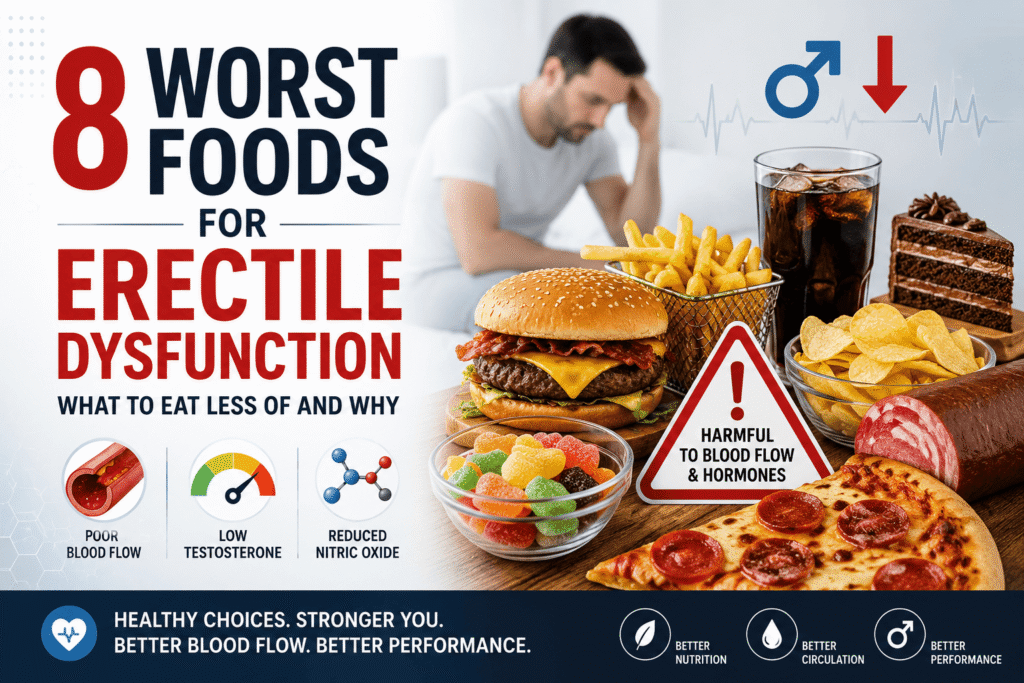
What you eat affects your erections — not as dramatically as a PDE5 inhibitor, but through the same underlying mechanism: blood vessel health and Nitric Oxide availability. The foods that cause the most damage do so by promoting atherosclerosis (arterial narrowing), raising blood pressure, worsening insulin resistance, and depleting or blocking Nitric Oxide — the chemical signal that initiates erections. Understanding exactly how these foods work against erectile function makes it far easier to make meaningful dietary changes rather than following a vague ‘eat healthier’ instruction. This article covers the 8 worst foods for Erectile Dysfunction, the specific mechanism behind each one, and practical alternatives where relevant.
The same dietary pattern that leads to cardiovascular disease also leads to Erectile Dysfunction — because both conditions share the same underlying cause: impaired blood vessel function. A study published in the American Journal of Clinical Nutrition found that men following a Western dietary pattern (high in red meat, refined grains, sweets, and high-fat dairy) had a significantly higher risk of ED than men following a Mediterranean dietary pattern. The foods at the top of the ‘worst for ED’ list are the foods most associated with cardiovascular disease.
Why Diet Affects Erectile Function — The Shared Mechanism
Erections require adequate blood flow to the corpus cavernosum — the erectile tissue. This blood flow is driven by Nitric Oxide (NO), which causes penile smooth muscle to relax and arterial blood vessels to dilate. Foods that impair this process do so through two primary pathways:
- Atherosclerosis and arterial narrowing: Diets high in saturated fat, trans fat, and refined carbohydrates promote the build-up of fatty plaques in arterial walls. The penile arteries are 1 to 2 mm — smaller than the coronary arteries — and show the effects of atherosclerosis first. Narrowed arteries cannot deliver the blood volume an erection requires.
- Nitric Oxide depletion: Several dietary factors — excess sugar, alcohol, and oxidative stress from processed foods — reduce the body’s ability to produce or preserve Nitric Oxide. Without adequate NO, the smooth muscle relaxation required for erection cannot occur. The same mechanism explains why smoking and Diabetes so severely impair erectile function.
Understanding this shared mechanism makes the worst foods list logical rather than arbitrary: they all damage blood vessels, raise blood pressure, impair insulin sensitivity, or suppress Nitric Oxide production — often through multiple of these pathways simultaneously.
The 8 Worst Foods for Erectile Dysfunction
1. Saturated and trans fats (fried food, processed meat, baked goods)
Saturated fats — found in abundance in fried foods, fatty cuts of red meat, full-fat dairy products, and processed meats — directly promote atherosclerosis by raising LDL cholesterol and promoting arterial inflammation. Trans fats, found in commercially baked goods and some margarines (where still used), are even more damaging: they simultaneously raise LDL and lower HDL (‘good’) cholesterol, accelerating plaque formation.
The connection to ED is direct: atherosclerosis reduces blood flow to the penis by narrowing the penile arteries. The same arterial damage that causes heart disease causes ED — often years earlier, because the penile arteries are smaller and show damage first. Research from Wayne State University School of Medicine confirms that reduced blood flow from arterial disease is the most common cause of organic ED.
Practical swap: replace fried foods with baked, grilled, or steamed equivalents. Replace processed meat with lean poultry or fatty fish. Replace butter in cooking with olive oil.
2. Refined carbohydrates and added sugar
Refined carbohydrates — white bread, pastries, breakfast cereals, white rice, and sugary drinks — spike blood glucose rapidly. Repeated blood glucose spikes worsen insulin resistance over time. Insulin resistance impairs endothelial function (the inner lining of blood vessels), directly reducing Nitric Oxide production. It is also the key metabolic pathway toward Type 2 Diabetes — one of the most significant risk factors for ED, affecting 35 to 50% of men with Diabetes.
Added sugar in particular — from sodas, fruit juices, candy, and processed foods — contributes to Obesity, which raises oestrogen through the aromatisation of testosterone in fat tissue and further suppresses testosterone and libido. A high-sugar diet is one of the most direct routes from poor eating to hormonal disruption affecting sexual function.
Practical swap: replace refined carbohydrates with whole grains (oats, quinoa, brown rice, whole-grain bread). Replace sugary drinks with water, beetroot juice, or pomegranate juice — which actively support Nitric Oxide and blood flow.
3. Alcohol (heavy consumption)
The relationship between alcohol and ED is dose-dependent. Light to moderate consumption — under 21 drinks per week — is associated with a modestly lower ED risk in large meta-analyses, possibly through anxiety reduction and mild vasodilation. But heavy chronic drinking is one of the most significant modifiable causes of ED, acting through multiple mechanisms:
- Suppresses testosterone production by affecting the hypothalamic-pituitary-testicular axis
- Impairs the liver’s ability to clear oestrogen, allowing oestrogen levels to accumulate and further suppressing testosterone
- Damages blood vessel lining (endothelium), reducing Nitric Oxide production
- Causes peripheral neuropathy with very heavy prolonged use, affecting penile nerve sensitivity
- Acutely depresses the CNS and arousal signal required for erections — ‘whisky dick’
A cross-sectional study found that over 70% of alcohol-dependent men experienced sexual dysfunction across multiple domains. The message is not that all alcohol is equally harmful — it is that heavy, regular drinking consistently damages the biological foundations of erectile function.
4. High-sodium foods (processed foods, fast food, cured meats)
Excess dietary sodium is strongly associated with high blood pressure (Hypertension) — one of the most prevalent risk factors for Erectile Dysfunction. Hypertension damages arterial walls by creating persistent mechanical stress, accelerates atherosclerosis, and impairs the endothelial function required for Nitric Oxide production.
Most dietary sodium comes not from the salt shaker but from processed foods: canned soups, bread, breakfast cereals, deli meats, fast food, and restaurant meals. The average American consumes approximately 3,400 mg of sodium daily — well above the recommended 2,300 mg maximum. Reducing sodium intake to below 2,300 mg per day lowers blood pressure meaningfully and reduces its contribution to ED over time.
Practical swap: cook more meals from scratch rather than relying on packaged foods; use herbs, lemon, and spices rather than salt for flavour; check labels for sodium content and aim for under 600 mg per meal.
5. Soy in very high quantities (processed soy products)
Soy contains phytoestrogens — plant compounds (particularly isoflavones) that bind weakly to oestrogen receptors. At moderate levels — a serving of tofu or edamame — phytoestrogen exposure is not clinically significant for most men. However, heavy consumption of processed soy products (multiple soy protein isolate servings daily, soy milk as primary dairy replacement, multiple soy-based meat alternatives) may modestly suppress testosterone in predisposed individuals.
The concern is dose-dependent and not universal — several large studies show no significant effect on testosterone from typical soy consumption. The ‘worst food’ concern applies specifically to men consuming multiple large servings of soy daily from processed sources, not to those eating soy as part of a varied diet.
Practical guidance: moderate tofu, edamame, and fermented soy products are fine for most men. Limit heavily processed soy protein supplements and soy-based products as primary dietary staples.
6. Liquorice (in large quantities)
This is a less well-known dietary cause of reduced testosterone that most ED diet articles omit. Liquorice — particularly in large quantities or as a supplement — contains glycyrrhizin, a compound that inhibits the enzyme 11-beta-hydroxysteroid dehydrogenase, which is involved in the final step of testosterone synthesis. Studies have found significant, acute reductions in testosterone in men consuming 7 g of liquorice daily.
The concern is primarily for men consuming liquorice as a supplement, regularly eating large amounts of liquorice confectionery, or drinking liquorice-containing teas or herbal preparations in large quantities. Culinary amounts of liquorice flavour in food are not a concern. Liquorice root supplements specifically warrant caution.
7. Very low-fat diets
This is the most counterintuitive entry — and one of the most clinically important. Dietary fat is the precursor material for testosterone synthesis. Testosterone is a steroid hormone, and steroid hormones are synthesised from cholesterol. Cholesterol is primarily produced by the liver but also obtained from dietary fat.
A ScienceDirect review of scientific literature found that very low-fat diets (under 20% of total calories from fat) are associated with reduced testosterone levels in men. This means that extreme fat restriction — common in some weight-loss diets — can paradoxically worsen the hormonal environment for sexual function even while improving metabolic markers.
The solution is dietary balance: healthy fats from olive oil, avocado, nuts, and fatty fish are not just acceptable — they are necessary for testosterone production and cardiovascular health. Do not restrict fat to below 20% of calories.
8. High-caffeine sodas and energy drinks
This entry combines two problems in one product. High-caffeine sodas and energy drinks are high in refined sugar (addressing ED risk via the insulin resistance pathway) and high in caffeine from artificial sources rather than from the polyphenol-rich beverages (coffee, tea) that have associated health benefits.
Additionally, research published in PMC found that high caffeine intake from sodas — as opposed to coffee — was associated with reduced sleep quality, and poor sleep reduces testosterone. Testosterone is primarily produced during deep sleep cycles; chronic sleep deprivation measurably reduces morning testosterone levels.
Practical swap: coffee (2 to 3 cups daily) has population-level data linking it to lower ED prevalence, possibly through its chlorogenic acid polyphenols and circulatory effects. Switch energy drinks and caffeinated sodas for coffee or green tea if caffeine is desired.
Special note — grapefruit and Sildenafil: Grapefruit is not a food that directly causes Erectile Dysfunction through vascular damage. However, it is important to flag that grapefruit (and pomelo) must be avoided on any day you take prescription Sildenafil, Tadalafil, Vardenafil, or Avanafil. Both fruits inhibit the CYP3A4 enzyme that metabolises these medicines, raising blood levels unpredictably and increasing the risk of dangerous side effects. This interaction applies to the whole day of dosing, not just the time around taking the tablet.
What to Do If You Have ED
Avoiding the worst foods for Erectile Dysfunction is a meaningful and underestimated strategy — but it is one component of a comprehensive approach, not a standalone treatment.
- Exercise regularly: A Harvard study found that 30 minutes of walking daily reduced ED risk by 41%. Regular aerobic exercise improves the endothelial function and Nitric Oxide availability that these foods impair.
- Replace harmful foods with ED-supporting foods: Leafy greens (Nitric Oxide precursors), fatty fish (omega-3s), berries and pomegranate (antioxidants that protect Nitric Oxide), watermelon (L-citrulline), dark chocolate 70%+ (flavanols). A Mediterranean-pattern diet is the most evidence-based overall dietary strategy for reducing ED risk.
- Maintain a healthy weight: Obesity is one of the most powerful modifiable ED risk factors. A 42-inch waist is 50% more likely to be associated with ED than a 32-inch waist. Even modest weight loss through dietary change and exercise improves erectile function.
- Quit smoking: Smoking depletes Nitric Oxide — the same mechanism that saturated fats and sugar impair, but more acutely and directly. Erection quality measurably improves within weeks of stopping.
- Seek medical evaluation for persistent ED: Dietary changes alone are unlikely to resolve ED with a significant vascular, neurological, or hormonal component. A doctor can identify the cause, screen for cardiovascular risk, and recommend treatment — including prescription PDE5 inhibitors (Sildenafil, Tadalafil, Vardenafil, Avanafil), which are the evidence-based first-line medical treatment for most men with ED.
Conclusion
The worst foods for Erectile Dysfunction are worst precisely because they damage the physiological conditions that erections depend on — blood vessel health, Nitric Oxide availability, insulin sensitivity, and hormonal balance. Saturated and trans fats, refined carbohydrates, excess sugar, heavy alcohol, high-sodium processed foods, large quantities of processed soy, liquorice, and very low-fat diets all impair one or more of these pathways.
The dietary changes required are largely the same changes that protect cardiovascular health — because ED and heart disease share the same underlying vascular pathology. A Mediterranean-pattern diet that prioritises whole foods, healthy fats, lean protein, legumes, and minimal processed food is the most evidence-based dietary approach for supporting erectile function. Combined with regular exercise, adequate sleep, not smoking, and medical evaluation when needed, dietary improvement forms a meaningful part of a complete approach to ED management.
Frequently Asked Questions
-
Does sugar cause Erectile Dysfunction?
Yes — excess sugar intake is one of the most significant dietary contributors to ED. High blood sugar levels promote insulin resistance, which impairs endothelial function and reduces Nitric Oxide production — the chemical that initiates erections. Chronically high blood sugar from excess refined carbohydrate and sugar intake also damages the blood vessels and nerves supplying the penis directly, which is why Diabetes is one of the most significant risk factors for ED. Reducing refined sugar and carbohydrate intake improves insulin sensitivity and vascular health over weeks to months.
-
Are bananas good for Erectile Dysfunction?
Bananas can support erectile health through several mechanisms. They are rich in potassium, which relaxes arterial walls and helps regulate blood pressure — a key ED risk factor. They contain bromelain, associated with testosterone support, and Vitamin B6, which plays a role in testosterone metabolism. Research also links flavonoid-rich fruit consumption with a lower risk of ED in large population studies. Bananas are best viewed as a useful supporting food in a balanced diet rather than a standalone treatment.
-
Can eggs help with Erectile Dysfunction?
Eggs do not cure Erectile Dysfunction, but they are nutritionally supportive. They are a good source of L-arginine (a Nitric Oxide precursor that supports penile blood flow), Vitamin D (associated with testosterone levels in observational studies), and Zinc (essential for testosterone synthesis). There is no specific clinical evidence that eggs alone improve ED, but they are a healthy protein source that contributes to the dietary conditions that support erectile function. Moderate egg consumption does not worsen ED in most men.
-
How quickly can dietary changes improve Erectile Dysfunction?
Nitrate-rich foods (beetroot, leafy greens) can increase blood Nitric Oxide within 2 to 3 hours. Short-term improvements in erection quality may be noticeable within 2 to 4 weeks of consistent dietary improvement. More durable improvements in vascular health, insulin sensitivity, and hormonal balance accumulate over 4 to 12 weeks of sustained dietary change. Diet works more slowly than prescription medication but addresses the underlying cause rather than managing symptoms per dose.
-
What is the single most important dietary change for men with ED?
There is no single most important change — but if one had to be chosen, eliminating or significantly reducing refined carbohydrates and added sugar would have the broadest impact: improving insulin sensitivity, reducing Obesity risk, lowering blood pressure, improving testosterone levels, and supporting vascular health. This one change simultaneously addresses four of the most common dietary mechanisms behind ED, and its effects compound over time.
This article is for general informational purposes only and does not constitute medical advice. If you are experiencing Erectile Dysfunction, consult a qualified healthcare provider. Dietary changes are complementary to, not a substitute for, medical evaluation and treatment.
