
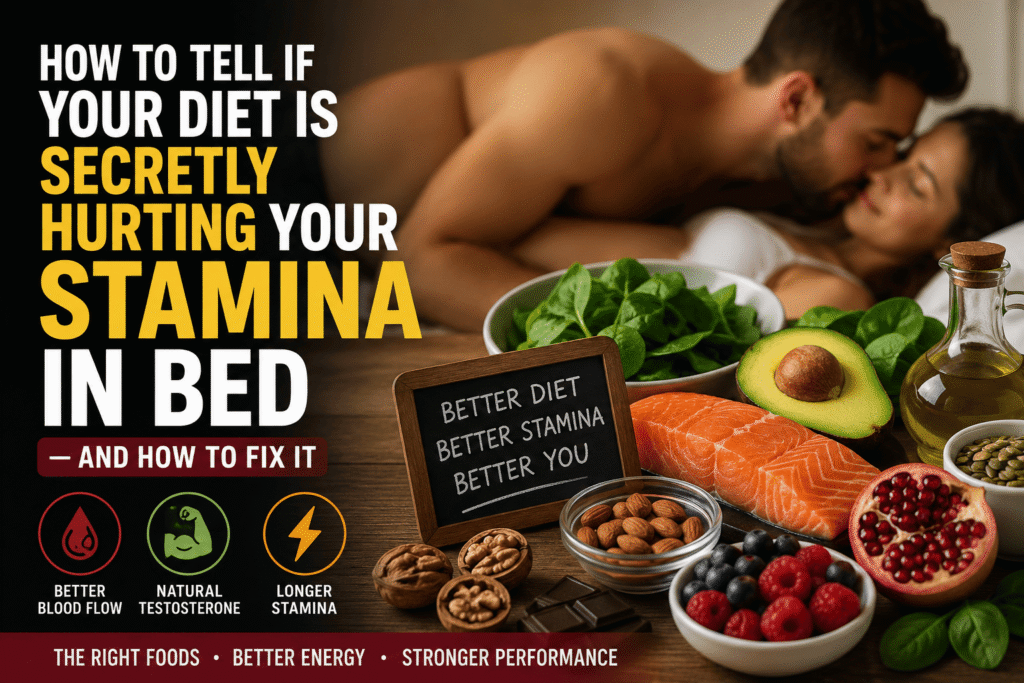
What you eat every day directly shapes your stamina in bed — through three interlinked pathways: blood flow, testosterone levels, and sustained energy. When those pathways are well-nourished, erections are stronger, endurance is better, and recovery is faster. When they are undermined by processed food, nutrient deficiencies, or poor meal timing, stamina drops — sometimes subtly, sometimes dramatically — even in otherwise healthy men. The challenge is that a poor diet rarely announces itself loudly. Instead, it quietly erodes the physiological conditions that sexual performance depends on, often being mistaken for stress, ageing, or relationship issues. This guide walks through how to recognise the signs that your diet is hurting your stamina in bed, explains the mechanisms behind each sign, shows you what to eat to fix it — including what to eat specifically before sex — and includes a practical 7-day stamina meal plan.
A ScienceDirect review of the scientific literature found that diet and dietary patterns play a significant role in male sexual dysfunction, with particular effects on Erectile Dysfunction and testosterone levels. Notably, very low-fat diets appear to decrease testosterone in men — a counterintuitive finding that underlines why balance, not restriction, is the dietary goal for sexual stamina.
Why Diet Affects Sexual Stamina: The Three Pathways
Before identifying the signs, understanding why diet affects stamina makes the connection much clearer — and makes dietary changes more motivating.
- Blood flow: Erections and sexual stamina depend fundamentally on healthy blood vessel function. The penile arteries are small — approximately 1 to 2 mm — and they are among the first to show the effects of poor circulation. Diets high in processed foods, refined carbohydrates, saturated fats, and excess sodium promote atherosclerosis (arterial stiffening and narrowing), reduce Nitric Oxide production (the chemical that dilates blood vessels), and raise blood pressure — all of which reduce blood flow to the genitals during arousal.
- Testosterone: Testosterone supports libido, arousal, energy, and muscle function — all components of sexual stamina. Diets high in refined carbs and sugar increase insulin resistance, which reduces testosterone production. Excess alcohol, trans fats, and processed soy can all disrupt hormonal signalling. Conversely, very low-fat diets also reduce testosterone, since dietary fat provides the raw material for steroid hormone synthesis.
- Sustained energy: Sexual activity requires sustained physical effort. Diets dominated by refined carbohydrates and sugar produce rapid blood glucose spikes followed by crashes — leading to fatigue, reduced concentration, and impaired physical performance mid-encounter. Stable blood sugar from complex carbohydrates, protein, and healthy fats supports consistent energy throughout.
Step 1 — Signals from Your Body During Sex
Start by paying attention to what happens during intimacy itself. These are the most direct indicators that diet is affecting your stamina.
1. Sudden energy drops or breathlessness
If you feel tired, breathless, or physically spent within minutes of beginning sexual activity, your aerobic capacity and energy reserves are likely insufficient. This is commonly linked to diets high in refined sugar and ultra-processed foods, which cause rapid blood glucose spikes and subsequent crashes — leaving the body with inadequate stable fuel for sustained physical effort.
Track whether your energy lasts longer on days you have eaten whole-food, nutrient-dense meals versus days of processed food or skipped meals. The difference is often noticeable within 1 to 2 weeks of consistent dietary improvement.
2. Weaker or shorter-lasting erections
If erections feel less firm than they used to, or are harder to maintain without continuous stimulation, blood vessel health is likely involved. Diets high in processed foods and low in antioxidants damage the endothelial lining of blood vessels — reducing their ability to produce Nitric Oxide and dilate effectively in response to arousal. Low folic acid (folate) levels have also been independently linked to Erectile Dysfunction in research published by Healthline.
Notice whether erection quality varies on different days — if it is consistently better after lighter, more nutritious eating and worse after heavy, processed meals, the dietary connection is likely.
3. Reduced interest in sex (libido changes)
Low libido when you are relaxed and not stressed can signal hormonal disruption — particularly reduced testosterone. Nutrient deficiencies most commonly associated with low libido include zinc (essential for testosterone synthesis), Vitamin D (low levels correlate with low testosterone in multiple studies), and magnesium (associated with lower ED risk in research).
If libido improves on days or weeks when you eat a more balanced diet and declines on periods of high processed food consumption, dietary testosterone suppression is a likely contributor.
4. Slow recovery after sex
If you feel drained for hours after sex, or wake up sore and fatigued the morning after, your body lacks adequate repair nutrients. Recovery from physical activity — including sex — requires adequate protein (for muscle repair), iron (for oxygen transport), magnesium (for muscle relaxation and sleep quality), and antioxidants (to manage oxidative stress). A diet deficient in these leaves recovery incomplete.
Practical tip: Keep a simple diet and stamina journal for two weeks. Write down what you eat at each meal, your energy level during intimacy (1–10), and how you feel the morning after. Patterns typically emerge within 7 to 10 days, helping you identify which specific foods or meals correspond with better or worse stamina. This gives you personal data beyond general advice.
Step 2 — Signs Outside the Bedroom
The effects of poor diet on sexual stamina often show up outside the bedroom first. These are confirming signals that the pattern is diet-related rather than situational.
1. Frequent indigestion or bloating
Digestive discomfort signals poor gut health, which can impair nutrient absorption. If your body cannot efficiently absorb zinc, magnesium, Vitamin D, and B vitamins from food, the nutritional foundation for sexual stamina crumbles even if your diet appears reasonably healthy. Heavy meals before intimacy are also a direct cause of fatigue during sex — blood is redirected to digestion, away from the muscles and genitals.
2. Mood swings, irritability, and low stress tolerance
Poor diet disrupts the production of serotonin — the neurotransmitter that regulates mood and emotional stability — since approximately 90% of serotonin is produced in the gut and depends on adequate tryptophan, B vitamins, and zinc. Low mood, irritability, and chronic low-grade stress all suppress libido and can trigger performance anxiety, compounding the dietary impact with a psychological one.
3. Poor sleep quality
Late-night processed food and excess caffeine from sodas disrupt sleep. Poor sleep reduces testosterone (which is primarily produced during deep sleep), raises cortisol, and leaves you too fatigued for intimacy or for the physical effort it requires. If your diet is chronically disrupting sleep quality, its effects on sexual stamina compound nightly.
4. Cold extremities and poor circulation
Frequently cold hands and feet signal impaired peripheral circulation — the same vascular impairment that affects genital blood flow. High-sodium, high-saturated-fat diets contribute to elevated blood pressure and arterial stiffening, which reduce blood flow throughout the body including to the genitals.
5. Increasing waist size
Belly fat accumulation is closely associated with reduced testosterone through aromatisation — the conversion of testosterone to oestrogen in fat tissue. A man with a 42-inch waist is 50% more likely to have Erectile Dysfunction than a man with a 32-inch waist, according to Harvard research. Increasing waist size on a poor diet is therefore both a symptom and a cause of declining sexual stamina.
6. Poor physical endurance on light activity
If climbing a flight of stairs or jogging lightly leaves you noticeably winded, your cardiovascular fitness and energy reserves are insufficient for sustained sexual activity. Sexual stamina mirrors physical stamina — both depend on the same vascular, hormonal, and energy systems. A diet that undermines physical endurance undermines sexual endurance by the same mechanism.
If stamina issues persist despite improving your diet over 4 to 8 weeks, they may indicate an underlying medical condition such as Diabetes, Cardiovascular Disease, Thyroid Dysfunction, or a hormonal imbalance. These require medical investigation and cannot be resolved by diet alone. Persistent weak erections lasting more than 3 months always warrant a doctor’s evaluation.
Key Nutrients Your Sexual Stamina Depends On
Most guides list foods without explaining which specific nutrient in each food does the work. Here is the evidence-based nutrient map:
- Zinc: Essential for testosterone synthesis. Deficiency directly reduces testosterone and libido. Best food sources: oysters (richest by far), pumpkin seeds, red meat, crab, chickpeas.
- Folate (Vitamin B9): Low folic acid levels have been independently linked to Erectile Dysfunction. Best sources: dark leafy greens (spinach, asparagus), legumes, avocado.
- Magnesium: Associated with lower ED risk in research. Supports smooth muscle function, sleep quality, and testosterone production. Best sources: dark leafy greens, pumpkin seeds, dark chocolate, nuts.
- Vitamin D: Low Vitamin D levels consistently correlate with low testosterone in multiple studies. Best dietary sources: fatty fish, egg yolks, fortified foods — though sun exposure is the primary source. Supplementation is often clinically recommended in deficient men.
- L-arginine / L-citrulline: Amino acids the body converts to Nitric Oxide — the chemical signal that initiates erections and dilates blood vessels. Best sources: watermelon (L-citrulline), nuts, poultry, dark leafy greens (as dietary nitrates, a separate but complementary pathway).
- Omega-3 fatty acids: Support endothelial function and Nitric Oxide production. Reduce arterial inflammation. Best sources: fatty fish (salmon, mackerel, sardines), walnuts, flaxseeds.
- B vitamins (B6, B12): Support homocysteine metabolism (elevated homocysteine is a cardiovascular risk factor associated with ED), energy production, and testosterone metabolism. Best sources: poultry, fish, eggs, whole grains.
- Iron: Essential for oxygen transport. Low iron causes fatigue and reduced physical endurance. Best sources: red meat, legumes, dark leafy greens, pumpkin seeds. Note: excess iron from supplements without confirmed deficiency is harmful — food sources are generally safe.
Foods That Hurt Sexual Stamina — The List Most Guides Miss
Most diet and stamina articles focus only on what to eat. What to avoid is equally important:
- Refined carbohydrates (white bread, pastries, sugary cereals): Spike blood glucose, worsen insulin resistance over time, reduce Nitric Oxide production, and lower testosterone. The blood sugar crash after a refined carb meal causes exactly the fatigue and low energy that undermines sexual stamina.
- Trans fats and fried foods: Promote arterial inflammation and reduce blood vessel flexibility, directly impairing the vascular mechanism of both erections and physical endurance.
- Excess alcohol: Acute heavy drinking suppresses the nervous system and prevents erections — the ‘whisky dick’ phenomenon. Chronic heavy drinking reduces testosterone, damages blood vessels, and impairs nerve sensitivity.
- Very high-sodium foods: Raise blood pressure over time, damage arterial walls, and impair the endothelial function required for blood vessel dilation during arousal.
- Very low-fat diets: A counterintuitive finding: dietary fat provides the precursor material for testosterone synthesis. Men on very low-fat diets (under 20% of calories from fat) show reduced testosterone in multiple studies. Healthy fats from avocado, olive oil, nuts, and fatty fish are essential — not optional.
- Excess processed soy: Phytoestrogens in large quantities of processed soy products may modestly suppress testosterone. Moderate edamame and tofu are generally safe; heavy intake of soy-based protein supplements and multiple servings of processed soy daily is the concern.
- Excess caffeine from sodas: High caffeine intake from sodas (as opposed to coffee) is associated with reduced sleep quality, which suppresses testosterone. Additionally, sodas are high in refined sugar — combining two stamina-suppressing mechanisms.
How to Improve Sexual Stamina with Diet
The dietary pattern with the strongest evidence for sexual stamina is a Mediterranean-style approach: high in fruits and vegetables, whole grains, lean protein, healthy fats (olive oil, avocado, fatty fish, nuts), and minimal processed food, refined sugar, and excess alcohol.
Best foods to increase sexual stamina
- Whole grains (oats, quinoa, brown rice): Provide complex carbohydrates that release energy steadily, avoiding the blood sugar crashes that cause fatigue during intimacy.
- Dark leafy greens (spinach, rocket, kale): High in dietary nitrates (Nitric Oxide precursors), folate, magnesium, and antioxidants — supporting all three sexual stamina pathways simultaneously.
- Fatty fish (salmon, mackerel, sardines): Omega-3 fatty acids support endothelial function, reduce inflammation, and contain zinc for testosterone support.
- Lean proteins (eggs, chicken, legumes): Provide L-arginine, B vitamins, and the amino acids needed for muscle repair, hormone production, and sustained energy.
- Healthy fats (avocado, nuts, seeds, olive oil): Essential for testosterone synthesis, nerve function, and cardiovascular health. Do not over-restrict fat in an attempt to lose weight — this suppresses testosterone.
- Fruits (berries, bananas, pomegranates): Berries and pomegranate provide antioxidants that protect Nitric Oxide. Bananas provide potassium for blood pressure regulation and quick-release carbohydrate energy.
- Zinc-rich foods (oysters, pumpkin seeds, chickpeas): Directly support testosterone synthesis and sexual desire.
- Dark chocolate (70%+ cocoa): Flavanols stimulate Nitric Oxide production and release dopamine — supporting both erection quality and pleasure response.
What to Eat Before Sex for Better Stamina
This highly searched question is absent from the original article and from most diet-and-stamina guides. Meal timing and food choice on the day of sexual activity makes a real practical difference.
2 to 3 hours before — the optimal window
The best meal before sex is light, nutrient-dense, and easily digestible. A heavy meal redirects blood to digestion, directly competing with the blood flow needed for arousal and erection. A high-sugar meal causes a blood glucose spike followed by fatigue. Aim for:
- Light protein source — grilled chicken, salmon, eggs, or legumes
- Complex carbohydrate — quinoa, brown rice, or sweet potato for steady energy
- Leafy greens or vegetables — for Nitric Oxide precursors
- Hydration — 1 to 2 glasses of water in the hours before
Specific foods with faster stamina-supporting mechanisms
- Beetroot: Increases blood Nitric Oxide within 2 to 3 hours. A 250 ml glass of beetroot juice 2 to 3 hours before sex may modestly support blood flow.
- Watermelon: L-citrulline converts to L-arginine and then Nitric Oxide within a few hours. Include blended watermelon (with some rind) earlier in the day.
- Dark chocolate: Flavanols improve flow-mediated dilation within 2 hours. 20 to 30 g of 70%+ cocoa chocolate is a practical pre-sex snack.
- Pomegranate juice: Antioxidants protect Nitric Oxide from oxidative breakdown. 240 ml of 100% pomegranate juice has a rapid effect on Nitric Oxide bioavailability.
What to avoid before sex
- Heavy, fatty meals — cause post-meal fatigue and redirect blood to digestion
- Large amounts of alcohol — impairs nerve signals and arousal
- Grapefruit or grapefruit juice — if you take prescription Sildenafil (Viagra), grapefruit inhibits its metabolism and raises drug levels unpredictably
- High-sugar foods and drinks — rapid glucose crash causes fatigue mid-encounter
7-Day Sexual Stamina Diet Plan
This plan prioritises Nitric Oxide-supporting foods, testosterone-supporting nutrients, complex carbohydrates for sustained energy, and vegetarian swap options throughout the week.
| Day | Breakfast | Lunch | Dinner | Snacks |
| Mon | Oats with blueberries, walnuts and Greek yogurt | Grilled chicken + quinoa salad with rocket and avocado; tofu salad for veg swap | Baked salmon, sweet potato, steamed broccoli; roasted chickpeas for veg swap | Apple with almond butter; pumpkin seeds |
| Tue | Scrambled eggs, wholegrain toast, avocado; scrambled tofu for veg swap | Lentil soup with vegetables and brown rice | Turkey stir-fry with peppers and courgette; tempeh stir-fry for veg swap | Cottage cheese with pineapple; or Greek yogurt |
| Wed | Overnight oats with chia seeds, banana, and spinach | Tuna/chickpea salad wrap with mixed greens; all-chickpea for veg swap | Chickpea curry with cauliflower rice; add salmon as side for non-veg | Hummus with celery; orange |
| Thu | Muesli with milk and mixed berries | Egg or lentil salad with quinoa and tomatoes; all-lentil for veg swap | Grilled fish, asparagus, couscous; jackfruit stir-fry for veg swap | Nuts and yogurt |
| Fri | Wholegrain toast, peanut butter, banana | Falafel wrap (spinach, capsicum, avocado, grated carrot, cottage cheese) | Lean beef stir-fry with broccoli, bokchoy, and peppers; paneer stir-fry veg swap | Fruit or cheese sticks with celery |
| Sat | Greek yogurt with granola, berries and pumpkin seeds | Veggie lentil salad with kale, cucumber, feta, olives; add canned tuna for non-veg | Sardines or eggplant bake with roasted vegetables and potatoes; both options work | Smoothie bowl with mixed fruit, spinach and granola |
| Sun | Omelet with spinach and mushrooms; tofu stir-fry for veg swap | Chicken quinoa bowl with avocado, corn, peas; tempeh quinoa bowl for veg swap | Tofu stir-fry with broccoli, snap peas and rice; add shrimp for non-veg | Apple with mixed seeds (pumpkin, flax, chia, sunflower) |
This is a general guide designed to improve sexual stamina through diet. For a personalised plan based on your specific health conditions, intolerances, or goals, consult a registered dietitian.
Hydration and Sexual Stamina
Hydration is one of the most consistently overlooked dietary factors for sexual stamina. Even mild dehydration — as little as 1 to 2% of body weight — can reduce blood volume, impair circulation, cause fatigue and headache, and reduce vaginal lubrication and genital sensitivity.
For men, dehydration reduces circulating blood volume, which directly impairs blood flow to the penis and can reduce erection firmness. It also increases the viscosity of blood, making it harder for the cardiovascular system to deliver adequate blood flow during the physical exertion of sex.
- Daily target: Approximately 2 to 2.5 litres of water per day for most adults, more in hot weather or after exercise.
- Before intimacy: 1 to 2 glasses of water in the hours before sex — not immediately before, which can cause inconvenient urgency.
- Avoid: Excessive alcohol and high-caffeine sodas, both of which are diuretic and contribute to dehydration on top of their direct hormonal and neurological effects on sexual function.
The Diet and Stamina Journal Method
One of the most practical steps in the original article — the diet and stamina journal — deserves development, because it converts general advice into personal, actionable insight.
- For two weeks, record every meal and snack with approximate portions
- Rate your energy level during intimacy on a 1 to 10 scale
- Note erection quality and duration if relevant (a simple 1–4 scale matching the Erection Hardness Score)
- Note your recovery the morning after — energy, soreness, mood
- Note hydration level on each day (number of glasses of water)
- Note alcohol, sleep hours, and exercise for each day
After two weeks, review for patterns. Most men find clear correlations — days with leafy greens, adequate protein, good sleep, and limited alcohol corresponding with noticeably better stamina. Days heavy in processed food, excess alcohol, or poor sleep corresponding with worse performance. This personal data is more motivating than general advice and allows targeted rather than wholesale dietary change.
When to Seek Medical Advice
Dietary improvement can make a meaningful difference to sexual stamina — but it cannot resolve every cause of stamina loss. Seek medical evaluation if:
- Stamina issues persist despite 4 to 8 weeks of consistent dietary improvement
- Weak erections have been present for more than 3 months
- You have risk factors for Diabetes, Cardiovascular Disease, or Thyroid Dysfunction
- Stamina loss was sudden rather than gradual — this may signal a specific medical cause
- Poor stamina is affecting your relationship or your mental health significantly
A doctor can assess testosterone levels, blood glucose, cardiovascular risk factors, and thyroid function — all of which may contribute to stamina issues independently of diet and may require specific treatment.
Conclusion
Your diet affects your stamina in bed through three clear pathways: blood flow, testosterone production, and sustained energy. The signs that it is hurting your stamina — energy crashes during sex, weaker erections, reduced libido, slow recovery, poor circulation, and increasing waist size — often appear quietly and are easy to attribute to other causes. Recognising them for what they are is the first step.
The fix is not a restrictive diet — it is a consistent shift toward whole, nutrient-dense foods that support all three pathways: leafy greens, fatty fish, lean protein, healthy fats, complex carbohydrates, zinc-rich foods, and adequate hydration. Critically, do not over-restrict dietary fat in an attempt to eat healthily — healthy fats are essential for testosterone production. And pay attention to what you eat before sex specifically, since meal timing and food choice on the day matters as much as your long-term dietary pattern.
Frequently Asked Questions
-
Can dehydration or a poor diet reduce sexual stamina?
Yes — both are significant and underappreciated causes of reduced sexual stamina. Even mild dehydration reduces blood volume, impairs circulation, and reduces genital blood flow. A poor diet undermines stamina through three pathways: reduced Nitric Oxide production (impairing blood flow), lower testosterone (reducing libido and arousal), and blood sugar instability (causing energy crashes during sex). Staying hydrated and eating balanced meals daily can produce noticeable improvements in sexual stamina within 1 to 4 weeks.
-
Does alcohol have a long-term effect on stamina?
Yes. Acute heavy drinking suppresses the nervous system and can prevent erections — more than 2 to 3 drinks significantly impairs arousal and erection quality. Chronic heavy drinking is a longer-term problem: it lowers testosterone, damages blood vessel lining, reduces nerve sensitivity, and impairs liver function in ways that allow oestrogen to accumulate. Over months and years, heavy drinking is an independent risk factor for Erectile Dysfunction.
-
How long does it take to see improvement in stamina after dietary changes?
Early improvements in energy and erection quality can appear within 1 to 2 weeks of consistent dietary improvement. Nitrate-rich foods (beetroot, leafy greens) can increase blood Nitric Oxide within hours of eating. More sustained improvements in testosterone, vascular health, and physical endurance build over 4 to 12 weeks of consistent whole-food eating. If nutritional deficiencies in zinc, magnesium, or Vitamin D were present, correcting them can take 4 to 8 weeks of consistent intake.
-
Are there specific vitamins that help increase sexual stamina?
Yes. Vitamin D supports testosterone production — low levels are consistently associated with low testosterone. B vitamins (particularly B6 and B12) support energy production, hormone metabolism, and blood vessel health. Folate (B9) is specifically associated with reduced ED risk. Vitamin C helps produce carnitine, which supports cellular energy production. Zinc functions more as a mineral than a vitamin but is the most critical nutrient for testosterone synthesis. All are best obtained through a varied whole-food diet, with supplementation considered only when deficiency is confirmed.
-
What should I eat before sex to improve stamina?
Eat a light, easily digestible meal 2 to 3 hours before sex — something with lean protein, complex carbohydrates, and vegetables rather than a heavy or fatty meal. For faster-acting blood flow support, 250 ml of beetroot juice or 240 ml of pomegranate juice 2 to 3 hours before sex increases Nitric Oxide within hours. 20 to 30 g of dark chocolate (70%+ cocoa) has flavanols that improve vascular function within 2 hours. Avoid heavy meals, excess alcohol, and high-sugar foods, which cause fatigue and impair the nervous system signals required for arousal.
Citations
- Khera M, et al. Diet and male sexual dysfunction. ScienceDirect / Sexual Medicine Reviews. https://www.sciencedirect.com/science/article/pii/S2050052117300744
- 8 Foods for Erectile Dysfunction, T Levels, Sperm Count, and More. https://www.healthline.com/health/mens-health/foods-for-penis
- Harvard Health Publishing. 5 natural ways to overcome erectile dysfunction. https://www.health.harvard.edu/mens-health/5-natural-ways-to-overcome-erectile-dysfunction
- What to Eat Before Sex to Last Longer. https://www.hims.com/blog/eat-before-sex-last-longer
- MidLantic Urology. 6 Foods That Could Improve a Man’s Sexual Health. https://midlanticurology.com/6-foods-that-could-improve-a-mans-sexual-health/
- NIH / PMC. Caffeine from sodas and sleep quality. https://pmc.ncbi.nlm.nih.gov/articles/PMC10521926/
- NIH / NCBI. Serotonin and gut production. https://www.ncbi.nlm.nih.gov/books/NBK545168/
This article is for general informational purposes only and does not constitute medical advice. If you are experiencing persistent sexual stamina issues, consult a qualified healthcare provider. Dietary changes are complementary to, not a substitute for, medical evaluation and treatment.
PUBLISHING DETAILS (remove before publishing)
Slug: how-to-tell-if-diet-is-hurting-stamina-in-bed
Meta title: Is Your Diet Hurting Your Stamina in Bed? Signs & How to Fix It (60 chars)
Meta description: Signs your diet is secretly hurting sexual stamina — plus the foods, nutrients, and 7-day meal plan to fix blood flow, testosterone, and energy in bed. (152 chars)
Primary keyword: how to tell if your diet is hurting your stamina in bed
Secondary keywords: diet and sexual stamina | foods that hurt sexual performance | poor diet erectile dysfunction | diet affecting sex drive | foods to improve sexual stamina | sexual stamina diet plan | what to eat before sex | signs your diet is affecting sex life
Keyword placement: Primary: H1, intro, conclusion, meta title and description | Secondary: Step 1/Step 2 section headings, what to eat before sex H2, foods that hurt H2, FAQ Q1/Q5
Author: Janet Fudge, Pharma-D
Category: Sexual Wellness / Men’s Health
Key new vs original: Three pathways section (blood flow/testosterone/energy) | Key nutrients map with clinical sources (folate+ED, magnesium+ED, Vit D+testosterone) | Very low-fat diet testosterone warning | What to eat before sex section (entirely new) | Foods that hurt stamina dedicated H2 | Hydration section fully developed | Specific fast-acting foods (beetroot, pomegranate, dark chocolate) with timing | Aromatisation mechanism for belly fat | Grapefruit-Sildenafil warning in pre-sex section | Journal method expanded with EHS scale
